Is Kopaonik worth visiting in summer?
In Serbia Kopaonik is a byword for skiing, so it is easy to forget that this is the highest mountain of central Serbia and the largest national park in the country — which means there is plenty to do here when there is no snow. In summer the mountain is far quieter than in the ski season, temperatures are more pleasant than in the lowland towns, and the trails, viewpoints and waterfalls buried under snow in winter become open to explore.
Average daytime temperatures in July and August usually range from roughly 15 to 22°C, with cooler mornings and evenings (often below 10°C), while on some days the temperature can climb to 28–30°C. Thanks to the altitude the air is clean and noticeably fresher than in Belgrade or Niš, which makes Kopaonik an appealing choice in the hottest months of the year. Summer is also the season when accommodation is generally cheaper than in winter, so Kopaonik in summer combines nature, quiet and a more affordable budget.
One thing to keep in mind: part of the infrastructure (cable cars, hospitality venues) runs on a reduced summer schedule that differs from the winter one and can change from season to season, so check the current information before you travel. Below are 16 activities that form the basis of a good summer stay on Kopaonik.
1. Pančićev vrh
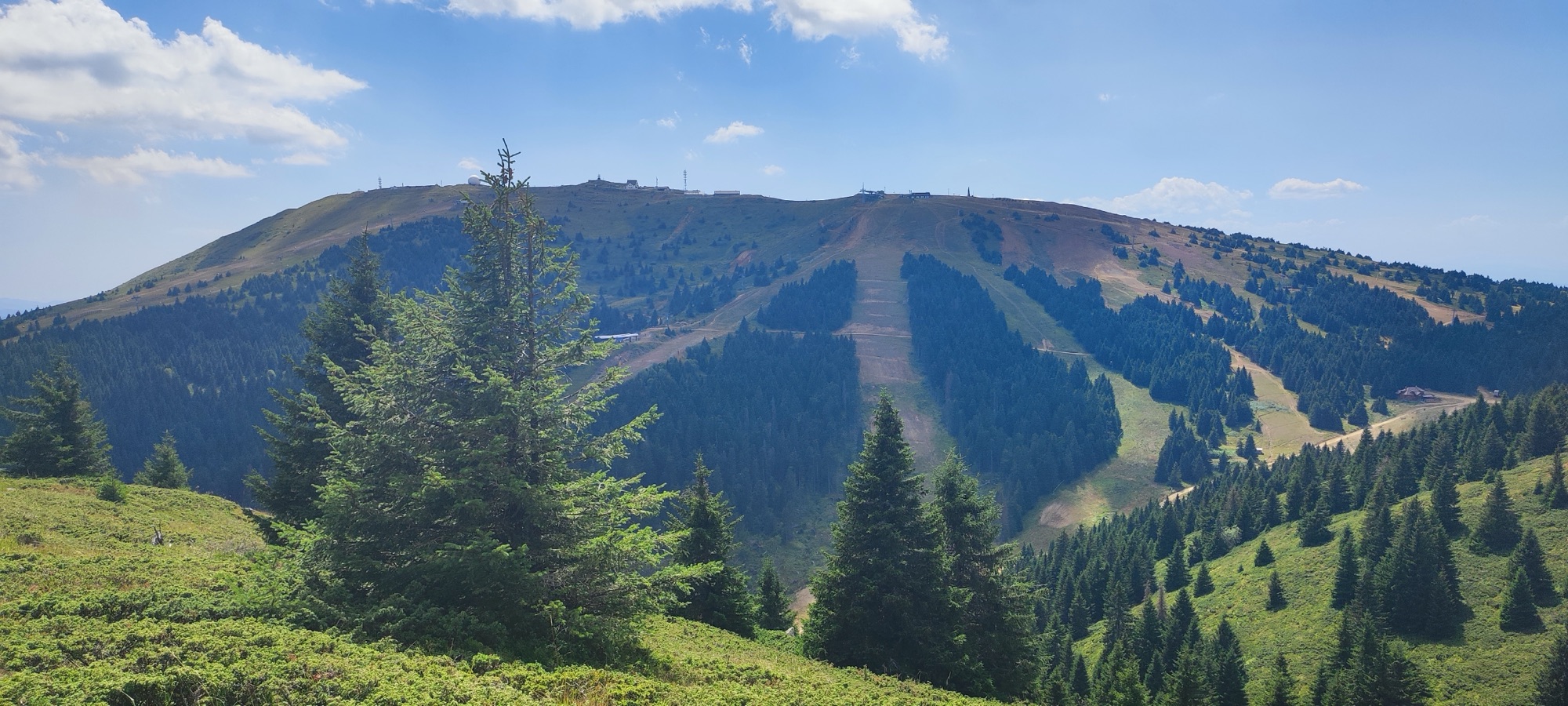
Pančićev vrh is the highest peak of Kopaonik (2,017 m) and the site of the mausoleum of the naturalist Josif Pančić, after whom the peak is named. In summer you reach it by cable car from the central plateau to the Suvo Rudište station (about 1,975 m), and from there only a few hundred metres of easy walking path remain to the summit itself.
- Time: 1.5–3 hours (using the cable car)
- Who for: everyone, including less fit visitors
- Children: yes, with supervision on the rocky summit
- Car: not needed
Tip: it is almost always windy and noticeably colder at the top than in the centre, so bring a jacket even in summer. The cable car runs a reduced summer schedule compared with winter — check it before you set off.
2. Nebeske stolice
Nebeske stolice ("heavenly chairs") is a rock formation and archaeological site at about 1,900 m above sea level, known for its view over the Ibar valley and, in clear weather, mountains further afield. The tour usually starts from the Sunčani vrhovi settlement (Pajino preslo), passes through the Duboka and Suvo Rudište reserves and takes roughly 4–5 hours of walking with around 400 m of elevation gain.
- Time: 4–5 hours
- Who for: more experienced hikers in good condition
- Children: not recommended for younger children
- Car: not needed (the walk starts from the settlement)
Tip: set out early in the morning — the tour is long, and summer weather at altitude can change quickly.
3. Hiking trails
Kopaonik National Park has an extensive network of marked hiking trails of varying length and difficulty — from the easier Duboka trail (about 4–5 hours) to more demanding tours such as Hajdučica or Oštri krš (5–8 hours), all the way to sections of the "Josif Pančić" mountain traverse, which covers around 46 km in two loops. If you are new to hiking, this is a good chance to try a shorter, gentler trail; if you are more experienced, Kopaonik has enough material for several days in a row.
- Time: from 3–4 hours to full-day tours
- Who for: anyone from families to experienced hikers
- Children: depends on the trail — check the length before setting off
- Car: depends on the trailhead
Tip: trail lengths and time estimates differ from source to source, so it is best to ask at the National Park info centre or check a current trail map before you set out.
4. Jankova bara
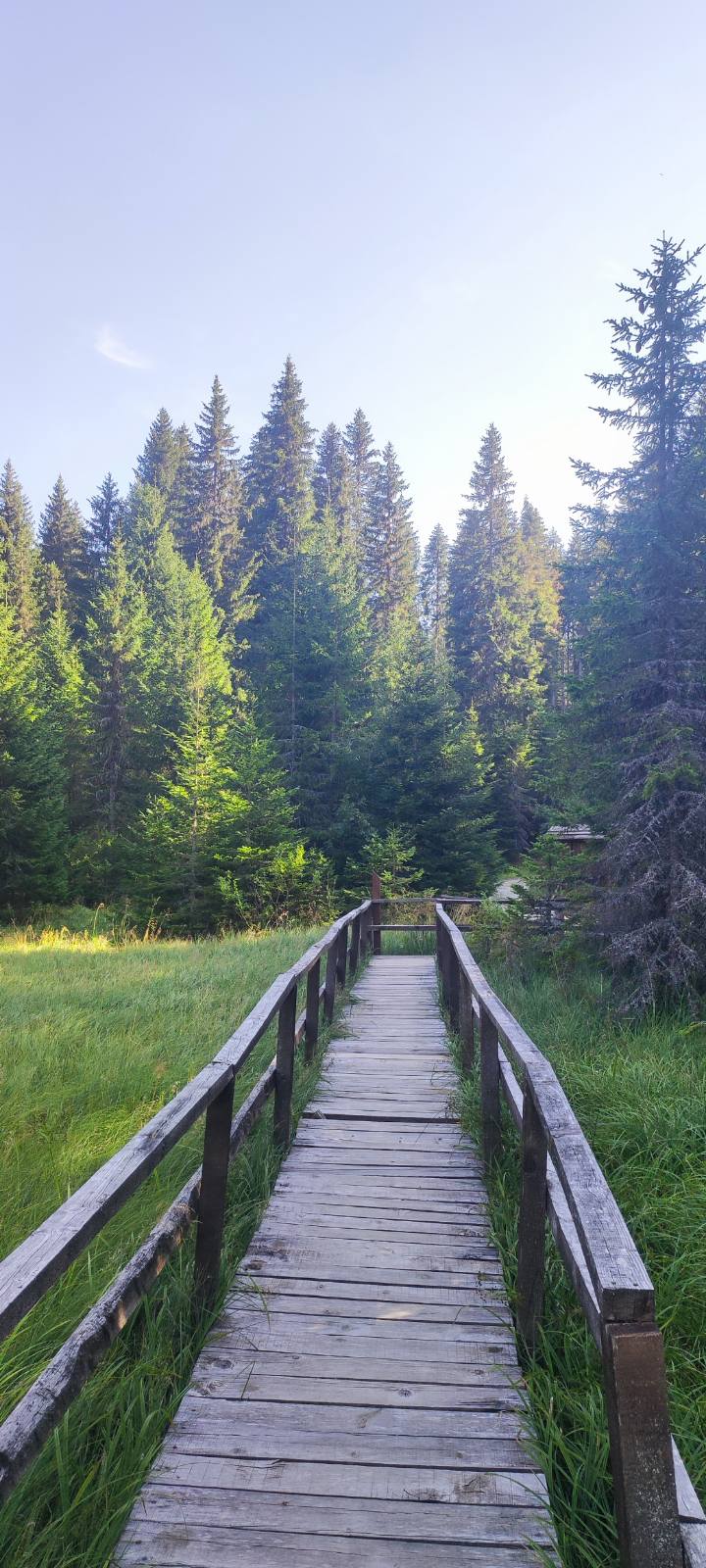
Jankova bara is the largest peat bog on Kopaonik and one of eleven nature reserves within the National Park. A wooden boardwalk leads across the marshy habitat, so this fragile ecosystem can be visited without walking on the ground itself. It is a habitat for rare and legally protected plant species, including several kinds of orchid, and the surroundings are made up of dense spruce and fir forest, meadows and streams.
- Time: ~40 min walk to the bog; the full marked tour 5–6 hours
- Who for: nature lovers; the shorter version also suits families
- Children: yes, for the short approach along the boardwalk
- Car: not essential — the walk starts from Ravni Kopaonik
Tip: sources differ — the bog itself is quoted at around 3 km, or some 40 minutes of easy walking through forest, while the complete marked "Jankova bara" tour is listed as a full-day, moderately difficult route (5–6 hours). Check at the info centre which version you are planning. Stay on the boardwalk — the bog is a protected habitat.
5. Jelovarnik waterfall
According to various sources Jelovarnik is described as one of the highest waterfalls in Serbia, with cascades estimated at around 70 metres. It lies in the south-eastern part of the National Park, in dense beech forest, and is reached by a local gravel road from Brzeće via Mramorski prolaz. How to plan the whole trip — including the alternative walking route via Pančićev vrh — is covered in detail in our separate guide to Jelovarnik.
- Time: half a day (as a trip by car)
- Who for: nature lovers, families, photographers
- Children: yes, with reasonable care on the gravel road
- Car: recommended
Tip: the waterfall is at its most impressive after rain, when the flow of water is higher.
6. Cycling
Kopaonik has the first bike park in Serbia, built in 2012 to European and Canadian standards — three downhill trails with a combined length of about 5 km, graded from easy (suitable for beginners and children) to advanced, for experienced riders only. There are also shorter cross-country trails (for example Suvo Rudište, about 3.3 km, and Pančićev vrh, about 2.2 km), and bikes can be hired in the centre of Kopaonik, by the Pančićev vrh cable car station, which also has special carriers for transporting bikes up the mountain.
- Time: from 2 hours to a full day
- Who for: from beginners (easy trail) to experienced riders
- Children: yes, on the easier trail
- Car: not needed if you stay in the centre
Tip: if you are unsure of your level, try the easy trail first — the bike park descents require experience and basic protective gear.
7. A panoramic cable car ride
Outside the ski season the cable cars and gondolas on Kopaonik do not stand idle — some of them run in summer too, mainly for panoramic rides and for carrying walkers and cyclists to the higher parts of the mountain. The summer timetable is shorter than the winter one and can differ between weekdays and weekends, and ticket prices change from season to season, so do check them before you arrive (on the Skijališta Srbije website or at the info centre).
- Time: 30–60 minutes
- Who for: everyone, especially those who want the view without the walk
- Children: yes
- Car: not needed
Tip: check whether the cable car is running that day before you plan the rest of your day around it — the summer schedule does vary.
8. Adventure park and adrenaline activities
An adventure park operates in the centre of Kopaonik with courses at different heights — one section for adults and children taller than roughly 130 cm (obstacles, bridges, a zip line at height), another for children and beginners closer to the ground, and an agility course for the youngest (roughly ages 4–10). Alongside this, summer also brings a rail bob, mountain carts down the run from Pančićev vrh and, depending on what is on offer that season, horse riding, archery and paragliding with instructors.
- Time: 1–3 hours
- Who for: adrenaline seekers, families with older children
- Children: yes, with height/age limits per section
- Car: not needed in the centre
Tip: check the age and height limits for each activity in advance, especially if you are travelling with younger children.
9. Activities for children
For families with children Kopaonik offers plenty beyond classic hiking in summer: the section of the adventure park adapted for the youngest, the easy bike trail, archery, open playgrounds in the settlements, and organised summer camps for children run during the season by various agencies and sports clubs. For families staying in the Sunčani vrhovi complex, a children's playground is available within the settlement itself.
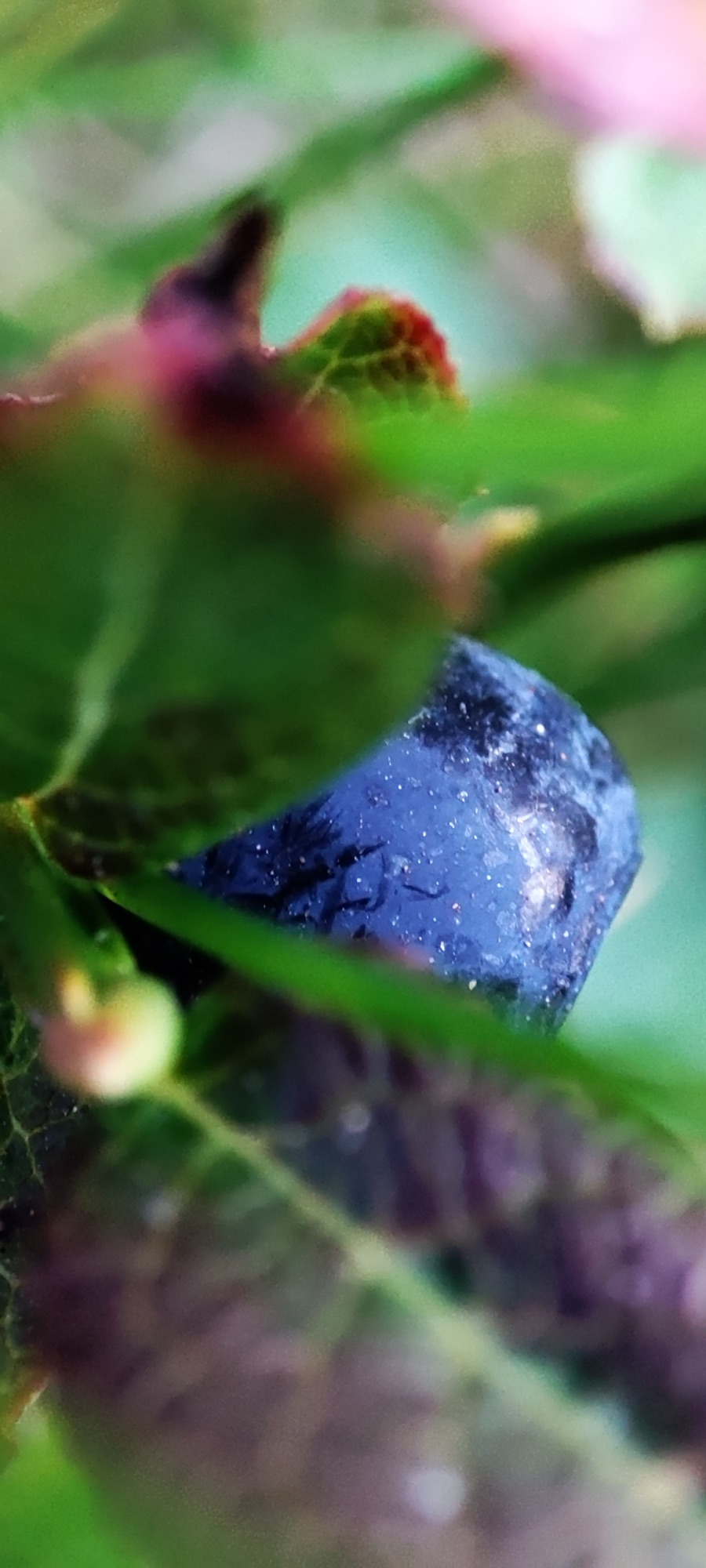
One simple activity children usually find genuinely exciting is picking wild blueberries and raspberries, which grow on Kopaonik in the meadows and along the mountain trails and ripen in August. It requires no equipment and no planning — a short walk near the trails and a small container for the fruit is enough.
- Time: as you like, from an hour to a whole day
- Who for: families with children
- Children: yes, this category is aimed squarely at them
- Car: generally not needed in the centre
Tip: plan at least one "slow" day without long tours — children usually enjoy a mix of shorter activities more than one demanding outing. If you are travelling in August, take the chance to pick blueberries and raspberries along the trails.
10. Viewpoints
Besides Pančićev vrh and Nebeske stolice, there are several smaller viewpoints along the trails around the centre offering views of the surrounding peaks and the Ibar valley, reachable with a walk of anything from 20 minutes to an hour. They are ideal for visitors who want a good view without a demanding climb.
- Time: 30 minutes to 1.5 hours
- Who for: everyone, including less fit visitors
- Children: yes
- Car: not needed
Tip: the best light for photographs is early in the morning or just before sunset.
11. Semeteško jezero
Semeteško jezero is a natural rarity — a small lake (about 60 m across) on which, because of the particular composition of the ground, floating islands of vegetation form and drift across the surface in the wind. For this reason it has been declared a hydrological natural monument. It lies at about 900 m above sea level, in the area of the village of Semeteš. As a marked hiking tour, the route to the lake is long and demanding (official estimates go up to 8–10 hours), so it is most often visited as part of an organised trip with a guide rather than as an independent walk.
- Time: a full-day trip (with a guide)
- Who for: lovers of natural rarities and more experienced hikers
- Children: not for the long independent tour
- Car: an organised trip or guide is recommended
Tip: if your time is limited, ask at the info centre about any shorter or local approaches to the lake before committing to the full marked tour.
12. Jošanička Banja
Jošanička Banja is a spa town at the foot of Kopaonik, known for its thermal springs, roughly 20-odd kilometres from the centre of Kopaonik (sources differ slightly on the exact distance), or about half an hour's drive. It is a good option for a relaxed day off the mountain — the spa complex, a short walk through the town and a change of scene after a day or two of active hiking.
- Time: half a day to a full day
- Who for: couples, older guests, families wanting a break
- Children: yes
- Car: needed (or organised transport)
Tip: a good combination for a day when the weather on the mountain itself is not ideal for hiking.
13. Brzeće and the surrounding area
Brzeće is a tourist settlement on the approach to Kopaonik, on the road towards the National Park, with its own accommodation and restaurants and the starting point for the trip to the Jelovarnik waterfall. The drive from the centre of Kopaonik to Brzeće takes between 20 and 30 minutes depending on the route — a useful stop for anyone wanting to combine a stay on the mountain with an outing to a lower, more rural setting.
- Time: half a day
- Who for: those wanting a change of scene and a trip to Jelovarnik
- Children: yes
- Car: needed
Tip: Brzeće is a practical starting point if you are planning to drive to Jelovarnik.
14. Photography and exploring nature
Kopaonik National Park is known for its rich and partly endemic flora — in summer the mountain meadows are in bloom with species characteristic of this area. For those who enjoy photography and nature, the morning and evening hours around the viewpoints and meadows give the best light, and a walk away from the main trails (within permitted zones) reveals a quieter, less touristy side of the mountain.
- Time: as you like
- Who for: nature and photography enthusiasts
- Children: yes, at a gentler pace
- Car: depends on the location chosen
Tip: stick to the marked trails — some of the flora is protected, and the ground away from the paths can be unstable.
15. Restaurants and local food
Kopaonik cooking leans on mountain specialities: lamb cooked under a sač (a metal lid covered with embers), homemade kajmak and cheeses from the surrounding villages, pies and mountain soups, as well as classic grilled meat (ćevapi, pljeskavica). There is a wide choice of restaurants and taverns in the centre and in Brzeće, from traditional to more contemporary, so there is no need to plan every meal in advance — a walk through the centre and a choice made on the spot will do.
- Time: per meal
- Who for: everyone
- Children: yes
- Car: not needed in the centre
Tip: if you are heading out of the centre (Jelovarnik, Jošanička Banja), take water and a snack — there are no places to eat out in the countryside.
16. A relaxed day in the centre of Kopaonik
Not every day has to be filled with climbs. The centre of Kopaonik — with Trg Josifa Pančića, its cafés and shops — has a calmer, more relaxed atmosphere in summer than in winter, without the crowds on the trails and lifts. A day given over to an easy walk, coffee on a terrace and short outings nearby is welcome after a day or two of more active hiking.
- Time: as you like
- Who for: everyone, especially after a more active day
- Children: yes
- Car: not needed
Tip: this is a good day to have a base near the centre — less time in the car, more in the fresh air.
Quick pick by type of visitor
- For families
- Pančićev vrh by cable car, adventure park (children's section), Jošanička Banja
- For hikers
- Nebeske stolice, Semeteško jezero, the "Josif Pančić" mountain traverse
- For couples
- Jelovarnik waterfall, viewpoints, a relaxed day and dinner in the centre
- For an active holiday
- Bike park, adrenaline activities, full-day hiking
- For easy walks
- Pančićev vrh (with the cable car), nearer viewpoints, Jankova bara, Brzeće
- For a day trip
- Jelovarnik waterfall or Jošanička Banja
Frequently asked questions
Is it worth going to Kopaonik in summer, not just in winter?
Yes — outside the ski season the mountain offers hiking, cycling, waterfalls and a quieter pace, with more pleasant temperatures than the lowlands and, generally, lower accommodation prices than in winter.
Do the cable cars run in summer?
Some of the cable cars and gondolas run during the summer season, but on a reduced schedule that differs from the winter one and can vary from year to year — check the current times before you travel.
Do I have to pay to enter Kopaonik National Park by car?
Yes, passenger vehicles are charged a daily, weekly or annual entry fee for the National Park, collected electronically (without stopping at a barrier). Check the amounts before you travel, as the price list can change.
How many days are enough for a summer stay on Kopaonik?
A two-day weekend is enough for a solid overview of the mountain — one more active day (hiking or the waterfall) and one more relaxed. For a detailed plan, see A summer weekend on Kopaonik.
Is Kopaonik suitable for families with small children?
It is, provided you choose activities suited to their age — the cable car to Pančićev vrh, the children's section of the adventure park, the boardwalk at Jankova bara and the easier trails are all good choices, while longer hiking tours (Nebeske stolice, Semeteško jezero) are not suited to younger children.
What is the weather like on Kopaonik in summer?
The mountain climate means cooler temperatures than in the lowlands, with average daytime values of roughly 15–22°C and colder mornings and evenings. The weather can change quickly, so layered clothing is always a good idea.
Do I need a car for a summer stay on Kopaonik?
For the centre of the mountain itself (cable car, bike park, adventure park, restaurants) a car is not essential. For trips out of the centre — the Jelovarnik waterfall, Jošanička Banja, Brzeće — a car makes things considerably easier, though some destinations are also reachable with organised transport or a guide.
Where to stay on Kopaonik in summer?
If you need a base near the centre, with the cable car, the trails and the restaurants all a short walk away, Konaci 119 is a renovated 22 m² apartment right in the centre of Kopaonik, in the Sunčani vrhovi complex. It sleeps up to three guests and has an equipped kitchen, Wi-Fi, a Smart TV and self check-in, so arrival and departure do not depend on anyone else's working hours.
More about the apartment and booking on the Konaci 119 home page.